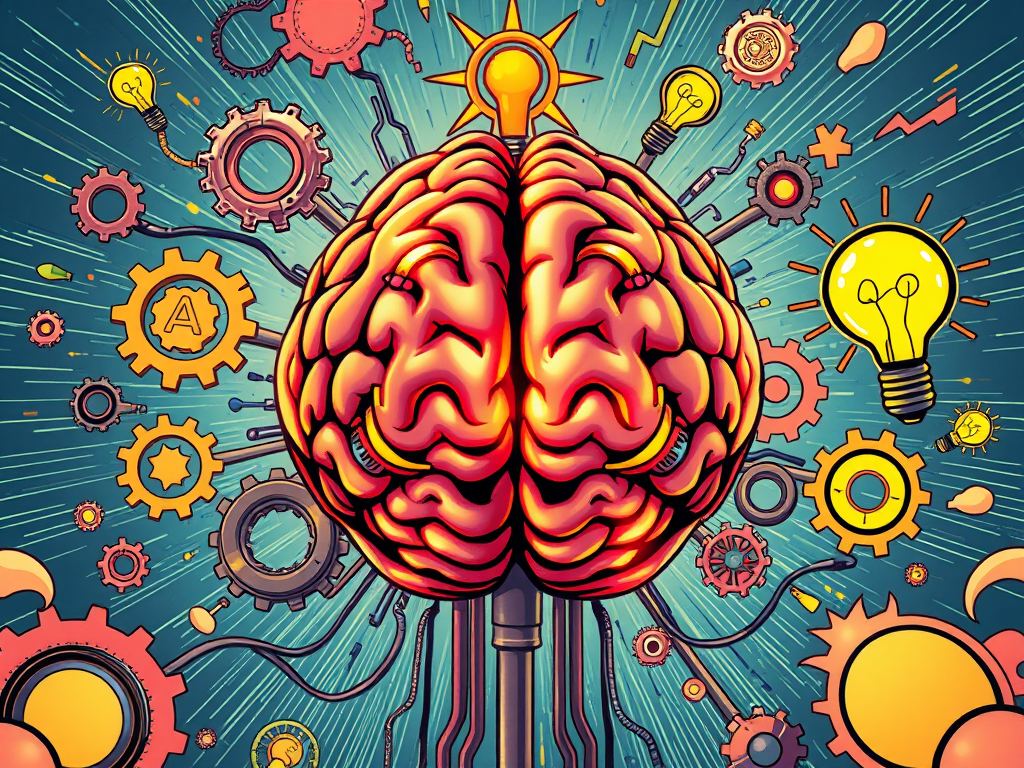
“The eye sees only what the mind is prepared to comprehend.” – Robertson Davies
Your Brain is Always Up to Something. Here’s the Catch.
You think you’re just looking at the world, right? Wrong. Your brain isn’t some passive tourist snapping pictures of reality. It’s more like a hyperactive event planner, always preparing for what’s next. Whether you’re glancing at a coffee mug or staring at a crowded street, your brain is already running the numbers on what you might need to do with what you’re seeing. It’s predicting, planning, and—most importantly—getting your body ready to act.
This idea isn’t just me riffing on how cool the brain is. It’s the crux of something called the Bold Readiness Theory. And once you get it, you’ll start to notice how much of your life is shaped by this sneaky mental mechanism.
Here’s the kicker: your perception of the world isn’t just about what’s out there; it’s a reflection of what your brain thinks you might need to do. The way you see things, the way you feel about them—it’s all tied to this readiness to act. So, how do you use this to your advantage? Let’s break it down.
Why You Keep Seeing Problems Everywhere (and How It’s Your Brain’s Fault)
“We don’t see things as they are, we see things as we are ready to deal with them.” – Slightly twisted version of Anaïs Nin
A few years ago, I was stuck in a cycle of overthinking. Every little task felt like a mountain to climb. Even opening my inbox felt like preparing for battle. Sound familiar? What I didn’t realize at the time was that my brain wasn’t just overwhelmed; it was busy preparing me for the worst-case scenario.
See, the Bold Readiness Theory, rooted in J.G. Taylor’s behavioral theory of perception, explains that your brain creates “action plans” for everything you experience. These plans aren’t just about movement—they’re about survival. Your brain filters the world based on what you’ve learned, what you’ve feared, and what you’ve practiced.
If you’ve trained yourself to expect conflict, you’ll see conflict everywhere. If you’ve rehearsed failure in your mind, your brain will highlight every cue that confirms it. It’s like wearing a pair of glasses that only show you what you’re bracing for.
For a deeper dive into how your emotions and mental models influence decision-making, check out Why Your Mood Secretly Hijacks Your Decisions.
The good news? If your brain can shape your perception in ways that hold you back, it can also do the opposite.
How to Hack Your Brain’s Readiness to See Opportunities, Not Threats
“What you focus on expands.” – Every self-help guru ever, but they’re not wrong this time
The first time I consciously changed my brain’s readiness, it felt like magic. I was running late to a meeting, stuck in traffic, and about to spiral into frustration. Instead of letting my mind prep me for stress, I did something simple: I asked myself, What’s the best way I can use this time?
Instantly, my brain stopped scanning for reasons to be mad and started scanning for solutions. I ended up using those 20 minutes to mentally rehearse my presentation. By the time I arrived, I was calm and prepared instead of frazzled and irritable.
Here’s how you can do it, too:
- Pause and Redirect: When you catch yourself spiraling into negativity, stop. Ask yourself what you actually want to be ready for—calm, clarity, creativity—and let your brain shift gears.
- Rehearse the Positive: Your brain loves patterns. If you mentally rehearse success, your brain will start preparing for it. This doesn’t mean pretending everything’s perfect; it means practicing the mindset and actions you’d take if things were going well.
- Change What You Practice: If you’re always preparing for the worst, your brain will get really good at it. Flip the script. Practice gratitude, problem-solving, or even just curiosity instead of fear.
To build habits that help train your brain for positive readiness, I highly recommend reading Atomic Habits by James Clear. You can grab it here on Amazon.
The Spatial Secret: How Your Body and Brain Work Together
“You can’t think your way out of a problem you acted your way into.” – Anonymous but wise
One of the wildest parts of the Bold Readiness Theory is how much it ties perception to action. In simple terms, your brain doesn’t just see the world; it sees your place in the world. It’s constantly calculating how you can move, what you can reach, and what you can avoid.
Ever notice how a cluttered desk can make you feel anxious? That’s not just you being picky. Your brain is scanning the mess and preparing you to navigate it—whether that means picking things up, shoving them aside, or just avoiding the chaos altogether.
The same goes for social situations. If you walk into a room expecting rejection, your brain will make you hyper-aware of every frown, every crossed arm. But if you walk in expecting connection, your brain will highlight smiles, open gestures, and opportunities to engage.
The Takeaway: Train Your Brain to Be Ready for the Life You Want
“Your future is created by what you do today, not tomorrow.” – Robert Kiyosaki
Understanding the Bold Readiness Theory isn’t just about nerding out on how perception works. It’s about taking control of how you experience the world. Your brain is already doing the heavy lifting—filtering, predicting, planning—so why not steer it in a direction that serves you?
Start small. The next time you feel stuck, overwhelmed, or unsure, remember this: Your brain is readying you for something. Ask yourself what you want to be ready for. Then, practice seeing the world through that lens.
It’s not easy, but it’s worth it. Because when you change what your mind is ready for, you change what you see. And when you change what you see, you change everything.
References
- Taylor, J.G. (1962). The Behavioral Basis of Perception. Yale University Press.
- Kahneman, Daniel. (2011). Thinking, Fast and Slow. Farrar, Straus and Giroux.
- Dweck, Carol S. (2006). Mindset: The New Psychology of Success. Random House.
- Personal experience and observations.
Share this with someone who needs a reminder: You’re not stuck. Your brain’s just getting ready. And you control what it’s getting ready for.
Leave a Reply