It always starts with the lie we tell ourselves over coffee. That this next Monday will be the one where we finally stop making the same damn mistakes. I spent most of my twenties thinking I was clever because I could argue anyone into submission. Truth is, I was just louder and more stubborn than a drunk at closing time.
Smart people don’t win arguments. They avoid them entirely.
They’ve got something better than a sharp tongue—they’ve got mental models. Little frameworks that cut through life’s nonsense faster than a knife through warm butter.
The Wake-Up Call That Changed Everything
I was 26, broke, and convinced the world owed me something. Every bad decision felt like cosmic injustice. Every missed opportunity was someone else’s fault. I was like my grandma during those inflation rants—blaming everything but my own choices.
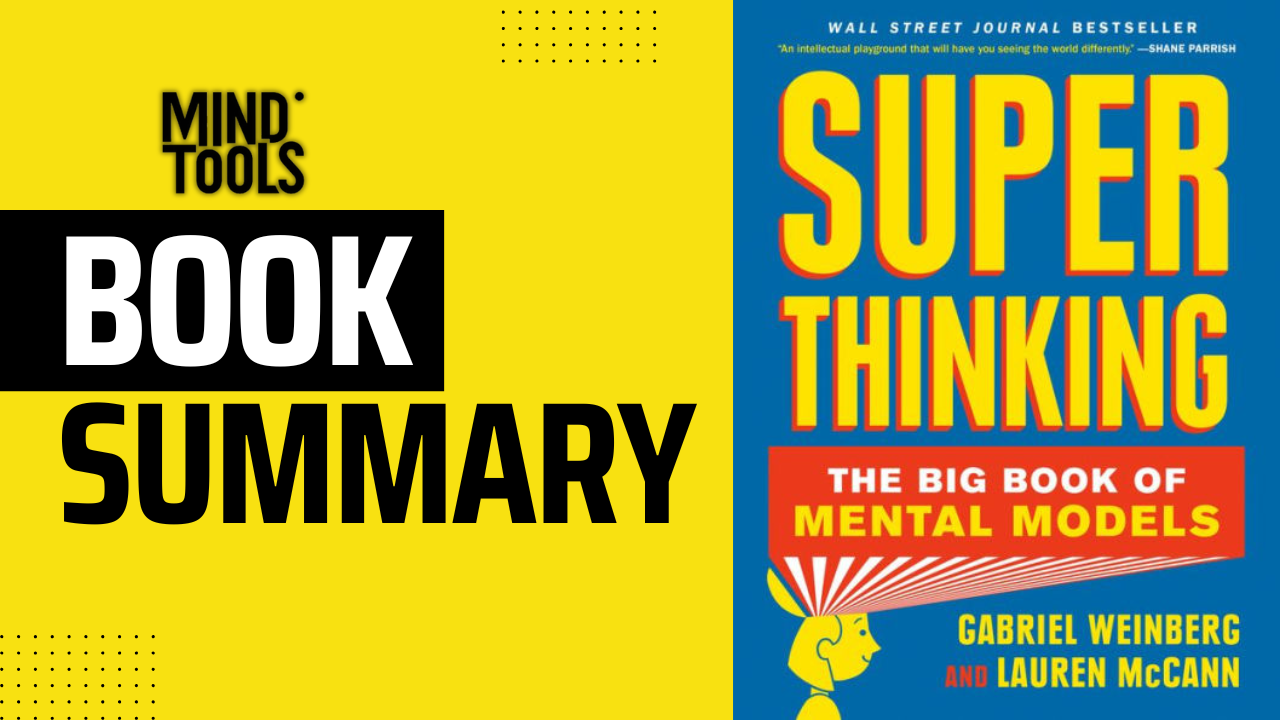
Then I read Super Thinking by Gabriel Weinberg and Lauren McCann. Not another self-help book promising overnight genius. Just a toolkit. Mental models borrowed from physics, economics, philosophy—frameworks that help you navigate life without stepping on every landmine twice.
Here’s what I learned from years of terrible decisions: The game isn’t about being right more often. It’s about being wrong less often.
Mental Model #1: Inversion – Think Backwards to Move Forward
Carl Jacobi had a motto that changed my life: “Invert, always invert.”
Instead of asking how to make money, ask how to avoid losing it. Instead of asking how to be successful, ask how to avoid failure. Instead of chasing what you want, figure out what you absolutely cannot tolerate.
I used to chase everything. New job? Sure. Investment opportunity? Why not. Side hustle? Count me in. I was like a dog chasing cars—all motion, zero strategy.
Then I started inverting. Instead of “What could go right?” I asked “What could go wrong?”
Game changer.
I stopped taking jobs that required soul-crushing commutes. Stopped investing in crypto because my buddy’s cousin said it was “definitely going to the moon.” Started saying no to things that didn’t align with my core values.
Elon Musk used inversion when everyone said electric car batteries would never cost less than $600 per kilowatt-hour. He didn’t ask “How do I make cheaper batteries?” He asked “What do batteries actually cost if I break them down to raw materials?”
Cobalt, nickel, aluminum, carbon—$80 per kilowatt-hour. He bought the materials directly. Problem solved.
Your turn: Pick one area where you’re stuck. Instead of asking how to succeed, ask how to avoid failing. The path forward becomes crystal clear.
Mental Model #2: Ockham’s Razor – The Simplest Answer Usually Wins
William of Ockham said when you have competing explanations, the simpler one is usually correct. Think horses, not zebras, when you hear hoofbeats.
This destroyed my dating life before it saved it.
I had filters more complex than a NASA mission brief. Must love hiking, be 5’7″ to 5’9″, have a college degree, enjoy obscure indie bands, and prefer dogs over cats. My dating pool was smaller than a kiddie pool in December.
Ockham’s razor cut through my nonsense: What actually matters? Funny, attractive, interesting. That’s it. Everything else is noise.
I started with three basic filters and worked backwards. Suddenly, I wasn’t spending Friday nights swiping through an endless parade of profiles that checked seventeen boxes but had the personality of stale bread.
The pattern repeats everywhere. Complex problems usually have simple solutions. We just make them complicated because complexity feels intelligent.
Simple beats smart every time.
Mental Model #3: The Veil of Ignorance – Decision Making Without Bias
John Rawls asked the ultimate question: What if you had to design a fair society but didn’t know where you’d end up in it? Would you support slavery if you might be born a slave?
Of course not.
I was managing a team when remote work became hot topic. My gut reaction? Kill it. I preferred everyone in the office where I could see them working—classic control freak behavior.
Then I applied the veil of ignorance. What if I was a single parent? What if I had a two-hour commute? What if I was caring for a sick relative?
My perspective shifted instantly. I wasn’t just thinking like a territorial manager—I was thinking like a human being who might need flexibility someday.
We kept remote work. Team productivity jumped 30%.
Sometimes being fair isn’t just moral—it’s profitable.
The brutal truth: Most of our “logical” decisions are just our biases wearing fancy clothes. The veil of ignorance strips them naked.
Mental Model #4: Survival of the Fittest – Adaptation Beats Strength
The peppered moth story blew my mind. Before the Industrial Revolution, light-colored moths thrived because they blended with light tree bark. Then pollution covered everything in soot. Dark moths suddenly dominated.
It wasn’t about being stronger or smarter—it was about adapting to change.
I learned this the expensive way when I tried building my first business selling DVDs in 2010. DVDs. In 2010. When Netflix was already streaming and everyone was going digital.
I was like those light-colored moths clinging to sooty trees, refusing to acknowledge the environment had changed.
Now I experiment constantly. New productivity methods, different content formats, emerging platforms. I don’t marry ideas—I test them. If something stops working, I pivot.
Darwin doesn’t care about your ego. The strongest species isn’t the one that lifts the most weight—it’s the one that adapts fastest to changing conditions.
Your industry is changing. Your relationships are evolving. Your skills need updating. You can either adapt or become a museum exhibit.
Mental Model #5: Correlation vs Causation – Don’t Confuse Coincidence with Truth
Just because two things happen together doesn’t mean one caused the other. People get flu shots and catch colds. They blame the shot, forgetting vaccination season coincides with cold and flu season.
I fell hard into this trap when I started creating content. Posted something on Sunday, got 10K views. Posted another Sunday, got 12K views. Obviously, Sunday was the magic day, right?
Wrong.
The algorithm was just warming up to my content. When I forced myself to post only on Sundays, engagement tanked. The obvious explanation is usually wrong.
Confounding factors hide everywhere. Ice cream sales and drowning deaths both spike in summer. Does ice cream cause drowning? No. Hot weather causes both.
Most success stories you hear are correlation masquerading as causation. “I wake up at 5 AM and I’m successful, so early rising causes success.” Maybe. Or maybe successful people can afford to control their schedules.
Question everything that seems obvious. The world is messier than our pattern-seeking brains want to admit.
Mental Model #6: Social vs Market Norms – Know Which Game You’re Playing
An Israeli daycare started fining parents for picking up kids late. Result? More parents showed up late.
Before the fine, parents felt guilty—they owed teachers consideration. After the fine, it became transactional. “I’m paying, so I can be late.”
I confused these norms when I started offering “friends and family discounts.” Instead of feeling grateful, people started expecting free work. I had turned social relationships into market transactions. Both suffered.
Now I’m clear about which game I’m playing. Business uses market norms—contracts, deadlines, payment terms. Friendship uses social norms—favors, reciprocity, goodwill.
Mixing them is like putting sugar in your gas tank.
Your relationship problems probably stem from playing by the wrong rulebook. Your business struggles might come from mixing friendship with commerce. The rules are different. Pick one.
The Hard Truth About Mental Models
Here’s what I wish someone had told me earlier: Mental models won’t make you a genius. They won’t prevent bad decisions. They won’t solve all your problems.
What they will do is give you a fighting chance.
Most people navigate life like they’re driving in fog with broken headlights. Mental models are like having GPS, clear windshields, and good brakes. You might still take a wrong turn, but you won’t drive off a cliff.
I spent years thinking intelligence meant knowing more facts, having stronger opinions, winning more arguments. Intelligence is about having better frameworks for processing information.
The smartest person in the room isn’t the one with all the answers. It’s the one asking better questions.
Your Next Move
Start simple. Pick one mental model. Inversion works great—ask what could go wrong instead of what could go right. Ockham’s razor is solid too—look for simple explanations instead of complex ones.
Use them like tools, not rules. A hammer doesn’t work for every problem, and neither does any single mental model.
The goal isn’t to think like Gabriel Weinberg or Charlie Munger or Elon Musk. The goal is to think better than you did yesterday.
Because in a world full of people making emotional decisions based on incomplete information, thinking clearly isn’t just an advantage—it’s a superpower.
Facts don’t speak for themselves. You need frameworks to make sense of them.
Stop trying so hard to be right all the time. Being wrong less often is more valuable than being right more often.
The frameworks are right here. The question isn’t whether they work—it’s whether you’ll use them.
What mental model hit you hardest? What assumption about your life just got flipped upside down? Because the only thing worse than making bad decisions is making the same bad decisions twice.
https://www.youtube.com/embed/Ly0stvzx-kw?si=QhHMFH5XQsdR2Ekx


Leave a Reply