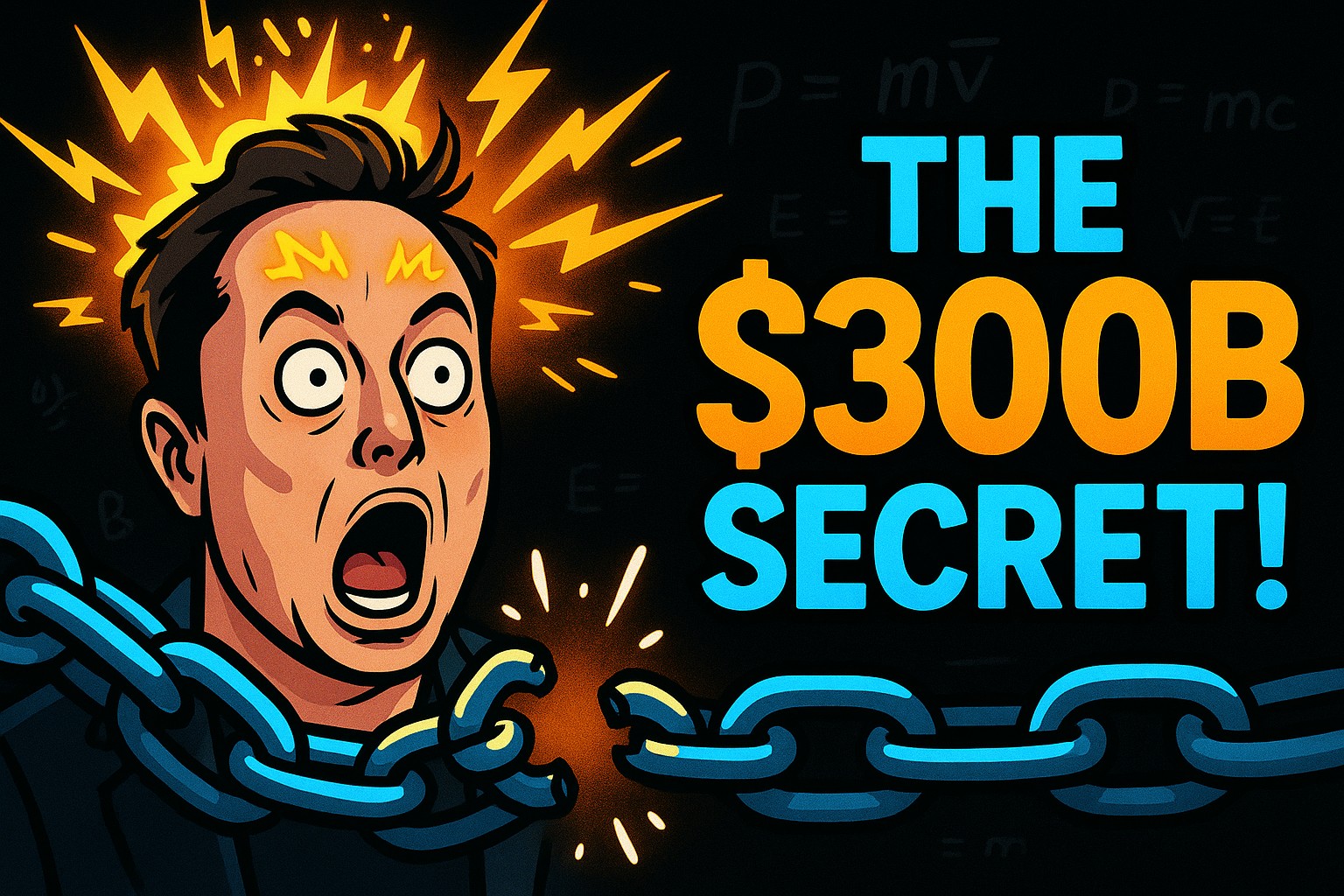
Listen up. I’m about to show you exactly how one man turned a simple thinking method into a weapon that obliterates billion-dollar industries. While you’re busy copying what everyone else does, Elon Musk is asking one question that makes CEOs sweat: “What if everything we believe is wrong?”
This isn’t another Musk fanboy article. This is about the mental model that lets him walk into any industry and flip it upside down. And yes, you can steal it.
The Physics Major Who Makes MBAs Look Stupid
Here’s what drives traditional business people crazy about Musk: He doesn’t play by their rules. When car companies said electric vehicles couldn’t work, he didn’t argue. He went back to physics.
When rocket scientists said reusable rockets were impossible, he didn’t debate. He grabbed a calculator.
When bankers said online payments were too complex, he didn’t negotiate. He built PayPal.
See the pattern? While everyone else argues about what’s possible based on what already exists, Musk asks a different question: “What do the laws of physics actually allow?”
First Principles: The Anti-Business School Approach
Business schools teach you to benchmark. Look at competitors. Find best practices. Improve by 10%.
Musk says that’s mental laziness.
First principles thinking means breaking everything down to fundamental truths—things you know are absolutely true—and building up from there. No assumptions. No “that’s how it’s always been done.” Just raw logic.
Example: Everyone knew rockets were expensive because that’s how aerospace worked. Musk asked: “What’s a rocket made of?” Aluminum, titanium, copper, carbon fiber. “What do these materials cost?” About 2% of a typical rocket price.
So where’s the other 98% going? Inefficiency. Tradition. Laziness.
That question launched SpaceX.
The Three-Step Musk Method That Terrifies Industries
Step 1: Question Every Assumption
When Musk enters an industry, he lists every single assumption that industry makes. Then he attacks each one like a prosecutor.
Banking assumption: “Transferring money takes days.”
Musk’s question: “Why? It’s just changing numbers in databases.”
Result: PayPal.
Auto assumption: “Electric cars must be ugly and slow.”
Musk’s question: “Says who? Electrons move faster than pistons.”
Result: Tesla.
Space assumption: “Rockets can only be used once.”
Musk’s question: “Do we throw away planes after one flight?”
Result: SpaceX.
Step 2: Break Down to Physics
Once he identifies the assumptions, Musk reduces everything to physical laws. Not market laws. Not industry standards. Actual physics.
This is where MBAs get lost. They think in terms of market share and profit margins. Musk thinks in terms of energy density and thermodynamics.
When designing Tesla batteries, he didn’t ask “What batteries do car companies use?” He asked “What’s the theoretical limit of lithium-ion energy storage?”
When building rockets, he didn’t ask “How does NASA do it?” He asked “What’s the minimum energy needed to reach orbit?”
Step 3: Rebuild From Scratch
Here’s where it gets brutal. After breaking everything down, Musk rebuilds—but only using what physics demands, not what tradition expects.
Traditional car companies start with existing designs and tweak them. Musk started with a battery pack and built a car around it.
Traditional rocket companies started with existing rockets and tried to make them cheaper. Musk started with the question “What’s the cheapest possible way to put mass in orbit?”
The difference? They’re optimizing. He’s revolutionizing.
Why This Destroys Competition
Traditional companies can’t compete because they’re playing a different game. They’re trying to be better at the old way. Musk creates a new way.
It’s like everyone else is trying to build a faster horse while Musk invents the car.
General Motors spends decades making 5% improvements to combustion engines. Tesla skips combustion entirely.
Boeing and Lockheed spend billions making rockets 10% more efficient. SpaceX makes them reusable.
Your competition improves. Musk obsoletes.
The Brutal Truth About Why You Don’t Think This Way
Here’s what nobody tells you: First principles thinking is mentally exhausting. Your brain hates it.
Know why? Because assumptions are mental shortcuts. They save energy. “That’s how it’s always been done” requires zero thinking. First principles requires you to question everything, verify everything, rebuild everything.
Most people would rather be wrong than think that hard.
Even worse: First principles thinking makes you look crazy. When everyone “knows” something works a certain way, and you say “Actually, that’s stupid,” you become the target.
Musk gets called insane regularly. Before success, first principles thinkers look like idiots. After success, they look like geniuses.
Most people can’t handle looking stupid that long.
The Hidden Power: Compound Knowledge
Here’s what the business press misses: Musk doesn’t just use first principles on products. He uses it on himself.
Instead of learning “car industry best practices,” he learned physics and engineering. Instead of studying “space industry standards,” he read Soviet rocket manuals.
Business knowledge has an expiration date. Physics doesn’t.
This compounds. Every company Musk builds makes the next one easier because he’s not learning industry-specific tricks—he’s learning universal laws.
PayPal taught him software physics. Tesla taught him battery physics. SpaceX taught him rocket physics. Each builds on the last.
Meanwhile, traditional executives know only their industry. When that industry changes, they’re worthless.
How to Steal This Method (If You Have the Guts)
Want to think like Musk? Here’s your blueprint:
Pick Your Target Industry
Choose an industry full of “that’s how it’s always been done.” The more assumptions, the more opportunity.
List Every “Rule”
Write down everything that industry believes. Every standard practice. Every “impossible” thing.
Attack Each Rule With “Why?”
For each rule, ask why it exists. Then ask why that reason exists. Keep going until you hit physics or math.
Find the Physics
What are the actual limitations? Not market limitations. Not regulatory limitations. Physical ones.
Design From Physics Up
Starting only with what physics demands, design your solution. Ignore how it’s “supposed” to be done.
Prepare for War
When you present your solution, everyone will say you’re wrong. They’ll quote industry standards. They’ll cite expertise. They’ll laugh.
Let them.
The Part Nobody Talks About: Extreme Pain Tolerance
First principles thinking isn’t just intellectually hard—it’s emotionally brutal. You’ll be wrong often. You’ll look stupid regularly. You’ll fail publicly.
Musk’s companies nearly died multiple times. Tesla almost went bankrupt. SpaceX had three failed launches. SolarCity struggled.
The difference? Musk treats failure as data, not defeat.
When a rocket explodes, he doesn’t see failure. He sees an experiment that revealed new information. When Tesla burns cash, he doesn’t see waste. He sees investment in learning.
This isn’t motivational nonsense. It’s practical. First principles thinking requires massive experimentation. Experiments fail. If you can’t handle failure, you can’t use this method.
Why Traditional Business Education Makes You Weak
MBA programs teach you to minimize risk. First principles thinking requires you to maximize learning. These are opposites.
Business schools teach case studies—what worked before. First principles teaches physics—what must work forever.
Business schools teach consensus building. First principles requires contrarian thinking.
Every moment you spend learning “best practices” is a moment you’re not questioning why those practices exist.
This is why Musk hired video game programmers to build rockets instead of aerospace engineers. The gamers knew physics. The engineers knew tradition.
Guess who built better rockets?
The Uncomfortable Reality: Most People Can’t Do This
I’m not here to motivate you. I’m here to tell you the truth. And the truth is: Most people’s brains aren’t built for first principles thinking.
It requires:
- Intellectual humility (admitting everything you know might be wrong)
- Massive pain tolerance (being wrong repeatedly)
- Social independence (looking crazy to peers)
- Mental stamina (thinking harder than feels natural)
- Long-term thinking (results take years, not quarters)
Look at that list. How many people do you know with all five traits?
Exactly.
The Opportunity Hidden in Plain Sight
But here’s the flip side: Because most people can’t do this, the opportunities are massive.
Every industry is full of assumptions waiting to be destroyed. Every “impossible” thing is just something nobody’s questioned properly.
While everyone else is making incremental improvements, you could be making revolutionary changes. While they’re fighting for 1% market share gains, you could be creating entirely new markets.
The tools are simple. The physics books are free. The method is public.
The only question is: Do you have the guts to use it?
Your Move
Stop reading about business strategy. Start studying physics and engineering. Stop copying competitors. Start questioning assumptions. Stop optimizing the old way. Start building the new way.
And if this sounds too hard, too painful, too uncertain—good. It should. That’s exactly why it works.
The moment something becomes easy, everyone does it. The moment everyone does it, the opportunity disappears.
First principles thinking stays powerful precisely because it stays difficult.
Want to go deeper? We break down mental models like this every week at The Mind Tools. No fluff. No feel-good nonsense. Just frameworks that actually work.
And if you’re serious about mastering thinking itself—not just business tactics—check out our books on thinking frameworks.
But honestly? Most of you will read this, nod your head, then go back to copying what everyone else does.
And that’s fine. Someone has to be the competition Musk destroys.


Leave a Reply